









- IncludedOne circle
- IncludedUp to 12 members per circle
- Not includedSide pots
- 3% fee on each contribution
- Not includedSlot transfer between members
- Not includedCustom branding
- Not includedRead-only API access
ROSCA · tontine · susu · chama · esusu
Your savings circles, simplified + in one place
Members form circles and contribute a fixed amount each cycle, weekly or monthly. What the pooled money is for, and when it pays out, depends on the circle type: a rotating pot, a welfare fund for life events, or goal-based savings.
- Works offline
- Mobile first
- Balanced ledger
The Njangi film0:30
The problem
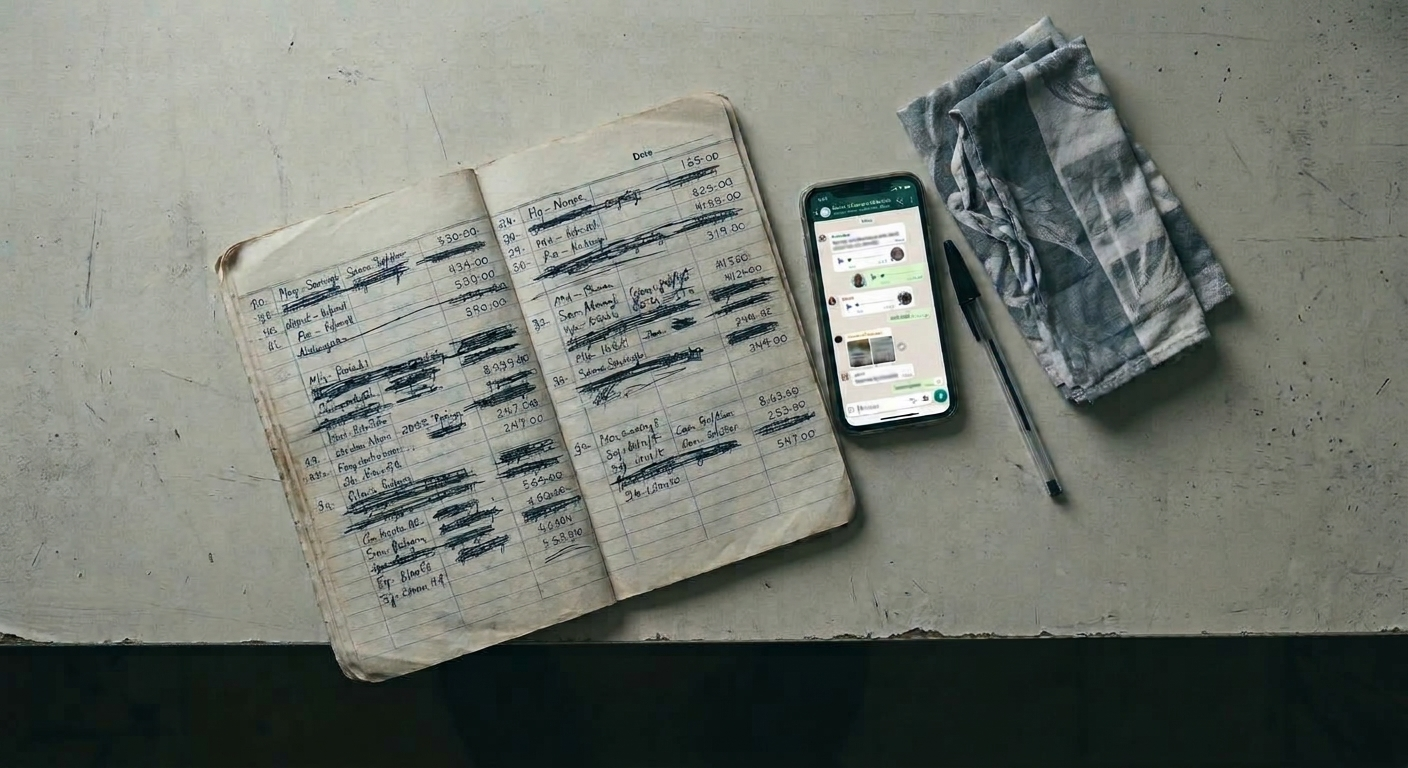
A notebook holds the circle together.Until it doesn't.
A balance only one person can check, a cycle someone missed, a payout order settled again at every meeting. Each doubt is a member who stops paying in.
How it usually goes
- A notebook only one person holds
- Balances taken on trust
- A missed cycle, and someone waits
- The payout order, argued again
How it goes here
- One ledger, the same on every screen
- Every contribution posted and timestamped
- A guarantee pool pays the recipient in full
- The selection method, fixed at creation
The solution
One circle.Every cycle on the record.
Members contribute a fixed amount each cycle, and the pot is awarded to one member at a time. Here is the whole sequence.
The circle
Form a circle
A circle is the committee plus its rules. It is long-lived and has one type. Members join the group, then opt into individual circles.
The rules
Set the type and the cadence
Set the type, the cadence and how the pot is awarded. The type decides why and when money leaves the pool.
The roster
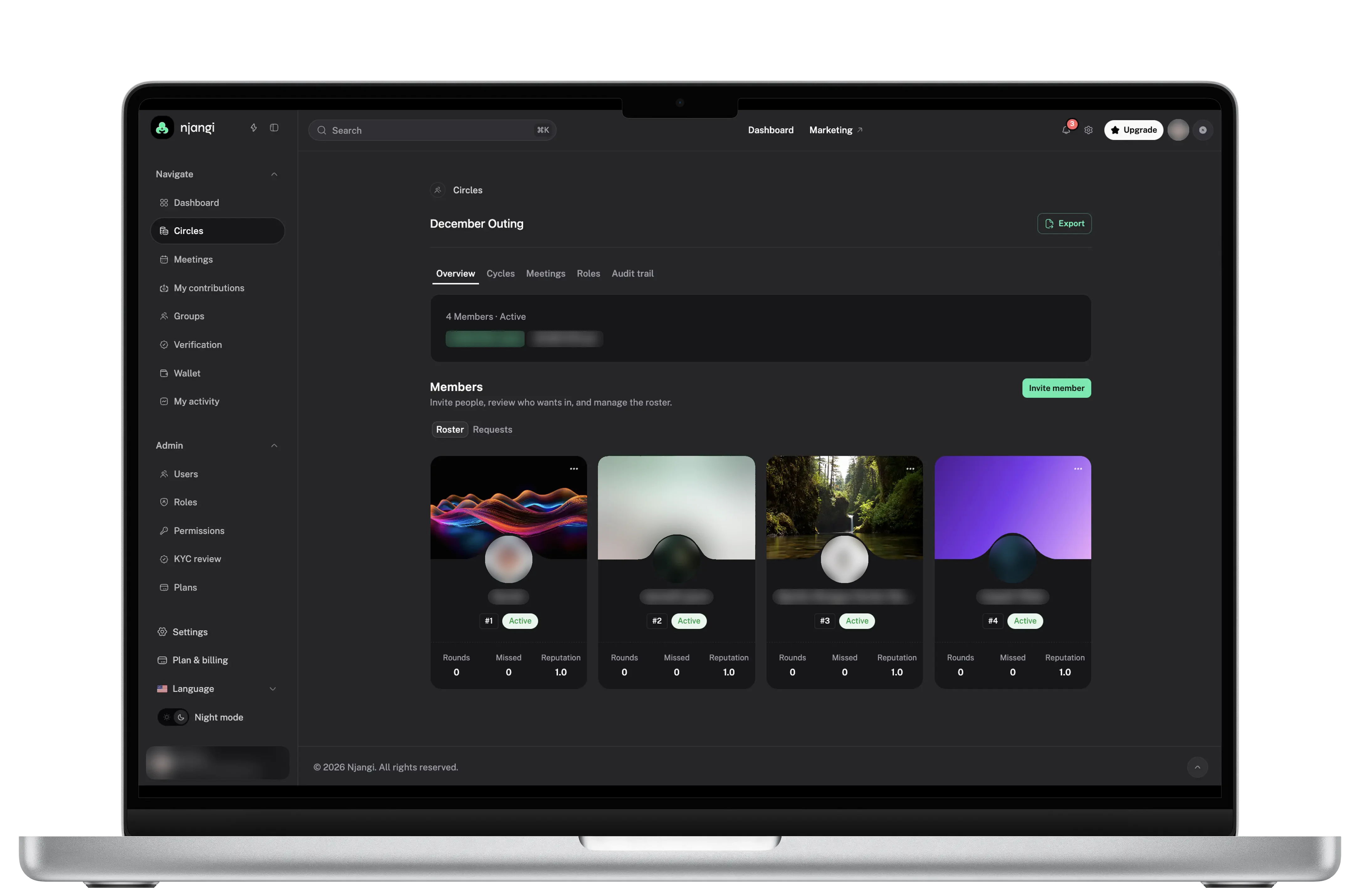
Invite the committee
Invite the members, and assign the roles a circle runs on: founder, treasurer, secretary, member.
Each cycle
Contribute each cycle
A cycle is one contribution period, weekly or monthly. Contributions are tracked per member per cycle, with reminders before the due date.
The payout
One member receives the pot
Every cycle, on schedule, one member is served. The recipient comes from the circle's own selection method, and the payout lands in the ledger.
The rotation
Complete the rotation
A rotation is one full pass: every member served once. Then the circle closes, or rolls into the next rotation.
The ledger
Every movement on the record
Each member sees their own contributions, payouts and penalties, drawn from the ledger. Every money movement is a balanced ledger transaction.
Circle type
Three kinds of circle.One idea each.
The circle type decides why and when money leaves the pool. Everything else is secondary to this.
The classic committee
Rotational
Money pays out every cycle, on schedule. Each member is served once per rotation, and the amount is the pot.
- Every member pays the same amount, every cycle.
- One member takes the whole pot each cycle.
- Nobody is served twice until everyone is served once.
How the pot recipient is chosen
Applies to rotational circles. Welfare circles use claims, not rotation.
- Fixed order
- A predetermined sequence set at circle creation.
- Ballot
- A random draw among members not yet served this round. The draw is auditable and reproducible.
- Bidding
- An auction each cycle. The member willing to take the smallest pot wins, and the discount is shared with the others as a dividend.
- Hybrid
- Ballot among the eligible, with a fixed fallback.
Meet fully remotely, at one fixed venue, or rotate hosting between members' homes.
Features
Everything a circle needs,in one place.
Eight things a committee does, from the first invitation to the closing statement, and all of it set by the circle's own rules.
Start a circle
Set the type, the cadence and how the pot is awarded, then invite the committee.
Collect each cycle
Contributions are tracked per member per cycle, with reminders before the due date.
Award the pot
The recipient comes from the circle's own selection method, and the payout lands in the ledger.
Welfare claims
A member files for a qualifying event, attaches evidence, and a person approves it.
Run a side pot
A collection beside the rotation, for a one-off purpose. Taking part never changes a member's place in the rotation.
Hand over a slot
A member who cannot carry on hands their slot to another, and the circle approves the transfer.
Meet where it suits
Fully remote, one fixed venue, or hosting that rotates between members' homes.
Statements per member
Each member sees their own contributions, payouts and penalties, drawn from the ledger.
The tontine notebook,put away for good.
With njangi, we help each other achieve things that would be difficult alone. What matters most to me is knowing that everyone has a responsibility and that we are working towards something together.
When you organise a njangi, you have to keep track of everyone's contributions and make sure things are clear. Having everything organised in one place would make the work much easier.
Sometimes you need a larger amount of money to make an important purchase or work on a personal project. That is why njangi is important to us. We contribute together, and everyone gets their turn.
Pricing
What a circle costsand what changes as you grow.
Two numbers decide what a circle costs you: the price of your plan, and the fee rate taken on each contribution.
Save 20%
- IncludedUp to 5 circles
- IncludedUnlimited members per circle
- IncludedUp to 3 side pots
- 2% fee on each contribution
- IncludedSlot transfer between members
- Not includedCustom branding
- Not includedRead-only API access
- IncludedUnlimited circles
- IncludedUnlimited members per circle
- IncludedUnlimited side pots
- 2% fee on each contribution
- IncludedSlot transfer between members
- IncludedCustom branding
- IncludedRead-only API access
Secure payment with

Trust & risk
Trust,made explicit
Circles run on trust, and default is the number one failure mode. The platform makes trust explicit.
In the platform today
On the roadmap
AI that advises, never decides
AI is advisory, never authoritative for money. No model output alone moves funds, approves a claim, or grants a loan.
A group who contribute a fixed amount each cycle and agree in advance what the pooled money is for. It goes by many names: tontine, susu, chama, esusu.
The guarantee fund pays the recipient in full, the draw is recorded against the member who missed, and it counts against their standing in the circle.
The circle does, when it is created. A set order, a ballot among those not yet served, an auction each cycle, or a ballot with a fixed fallback.
No. A circle can run fully remotely, keep one fixed venue, or rotate hosting between members' homes.
You can still record what you did. Offline actions are held as intentions and settle once the server has validated them.
English and French, across the whole product.
Stop running a circleon trust alone.
Bring your committee, set the rules once, and let the ledger keep the record. Your first circle can be collecting before the week is out.